Start here
Ceresian State System
Junic legitimacy, imperial continuity, Gischenism, public finance, and the archive's central state tradition.
A public, published-only guide to the setting. Use the historical reading paths first; futuristic starworks material sits at the bottom after the political and dynastic foundation.
Curated entry points for the main political, religious, military, dynastic, and technological arcs.
Junic legitimacy, imperial continuity, Gischenism, public finance, and the archive's central state tradition.
The Rietan colonial order, Papersmith organization, the independence war, and the postwar Perlian settlement.
Roscovia, Rietan, Manhisan, Frenemica, the Great War, and the diplomatic order after continental exhaustion.
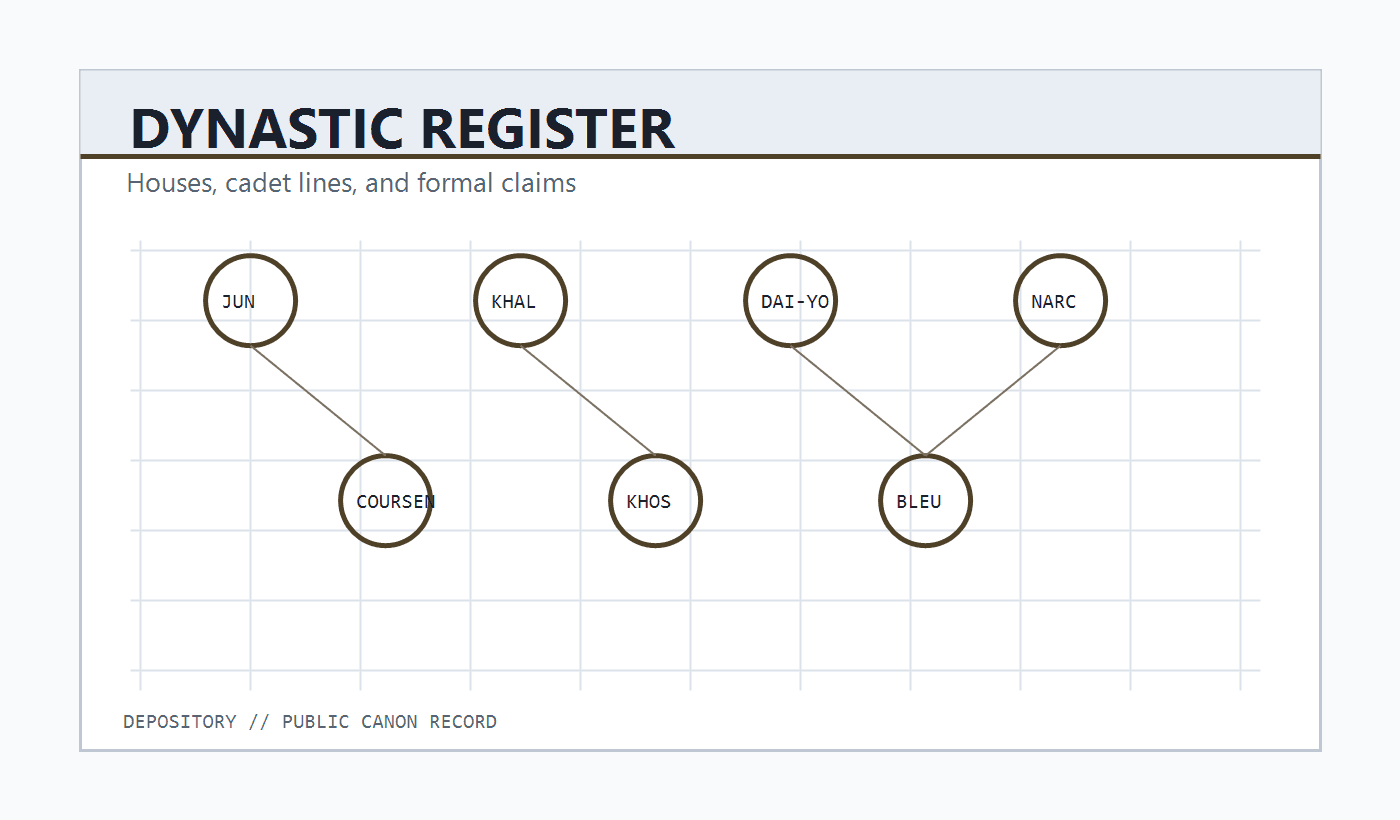
Noble houses, Proto-Ceresian roots, Daiyo restoration, Ran collapse, and Khosagar continental order.
KIC, Nieuwerk, wormhole systems, strategic resources, and interstellar industry after the historical foundation is clear.
The Ceresian Imperial Republic is the post-liberation Ceresian state, combining imperial continuity with Gischen technocratic republican institutions and later interstellar hegemony.
The Ceresian Tesamaic was the imperial Ceresian order that grew from Junic Ceresia, Kalarian conquest, and the Tesamaic title of harmonized rule.
The Daiyo Empire was the restored Hyun imperial order founded by the Dai-Yo house after revolt against Ran subjugation and later drawn into Ceresian and Rietan imperial history.
Successor state to the Heavenly Daiyo Empire after coalition independence and restoration politics.
The Frenemican Republic was a major post-Hanmavian Ponitzian state, industrial power, Anti-Rietan supporter, and later arena for far-right mobilization.
The Hanmavian Empire was the largest empire of the 100s, founded from Crastinist unitarian revolution in Astaran and later collapsed into the Manhisan state.
Successor state to the Ceresian Tesamaic established after the Ceresian War of Liberation.
The Khosagar Khaganate was a major western Perlian steppe and maritime empire whose alliance and rivalry with Ceresia shaped continental politics.
The Khosan Republic was the republican successor to the Khosagar Khaganate, founded after the Khosan Revolution and later integrated into the Ceresian-led order.
24 published records
The Ceresian Imperial Republic is the post-liberation Ceresian state, combining imperial continuity with Gischen technocratic republican institutions and later interstellar hegemony.
The Ceresian Tesamaic was the imperial Ceresian order that grew from Junic Ceresia, Kalarian conquest, and the Tesamaic title of harmonized rule.
The Daiyo Empire was the restored Hyun imperial order founded by the Dai-Yo house after revolt against Ran subjugation and later drawn into Ceresian and Rietan imperial history.
Successor state to the Heavenly Daiyo Empire after coalition independence and restoration politics.
The Federation of States was a central Ponitzian buffer state that became a powerful mixed-warfare actor and rival to both Rietan-Frenem and Volkygodian interests.
The Frenemican Republic was a major post-Hanmavian Ponitzian state, industrial power, Anti-Rietan supporter, and later arena for far-right mobilization.
The Hanmavian Empire was the largest empire of the 100s, founded from Crastinist unitarian revolution in Astaran and later collapsed into the Manhisan state.
Successor state to the Ceresian Tesamaic established after the Ceresian War of Liberation.
The Inarim People’s Democratic Republic was the southern Ponitzian revolutionary government dissolved under the Treaty of Ceresia.
The Karanshae Federation was the eunuchial and slave-warrior regime whose misrule preceded the Crastinist revolution and Hanmavian Empire.
The Khosagar Khaganate was a major western Perlian steppe and maritime empire whose alliance and rivalry with Ceresia shaped continental politics.
The Khosan Republic was the republican successor to the Khosagar Khaganate, founded after the Khosan Revolution and later integrated into the Ceresian-led order.
Direct military ally of the coalition whose status was re-formalized as a continued autonomous union after the war.
The Manhisan Empire was the successor core of the Hanmavian collapse and later a major participant in Anti-Rietan and Great War diplomacy.
The Marshanavid Empire was the successor to the Sannamid order, known for preserving river boundaries and maintaining a professional slave-soldier army.
The Narcouster Empire unified Lordshire, Pomdries, Narcissus, Hottorp, and frontier possessions before its defeat by the Hanmavian Revolution and later transformation into Rietan.
The Ran Empire was a militaristic apocalyptic theocracy from the Ranien mountains whose sacrificial ideology devastated Hyuna and shaped the rise of Ceresia and Daiyo.
State formed through consolidation of the Spice League Confederation into Spiasathinum, also known as Spiasa.
The Rietan Imperial Republic is a maritime trade empire on the Leonard Peninsula, successor to the Narcouster Empire and former hegemon over continental Perlia.
The Rietanian Socialist Republic was a Roscovian-aligned socialist force in northern Rietania during the Great War crisis.
The Roscovian Communist Republic succeeded the Volkygodian socialist order after civil debate, nationalist renovation, and the consolidation of Rosoviyan communist-fascist party structures.
The Sannamid Empire was the Astaran successor order that restored southern control after Kessetian fragmentation and prefigured the Hanmavian imperial region.
The Volkygodian Socialist Union was the first successful Gischenist-socialist state in Rosoviya and the predecessor to the Roscovian Communist Republic.
Volynia was the northern core realm of the Voyar order and the revolutionary birthplace of the Volkygodian Socialist Union.