Start here
Ceresian State System
Junic legitimacy, imperial continuity, Gischenism, public finance, and the archive's central state tradition.
A public, published-only guide to the setting. Use the historical reading paths first; futuristic starworks material sits at the bottom after the political and dynastic foundation.
Curated entry points for the main political, religious, military, dynastic, and technological arcs.
Junic legitimacy, imperial continuity, Gischenism, public finance, and the archive's central state tradition.
The Rietan colonial order, Papersmith organization, the independence war, and the postwar Perlian settlement.
Roscovia, Rietan, Manhisan, Frenemica, the Great War, and the diplomatic order after continental exhaustion.
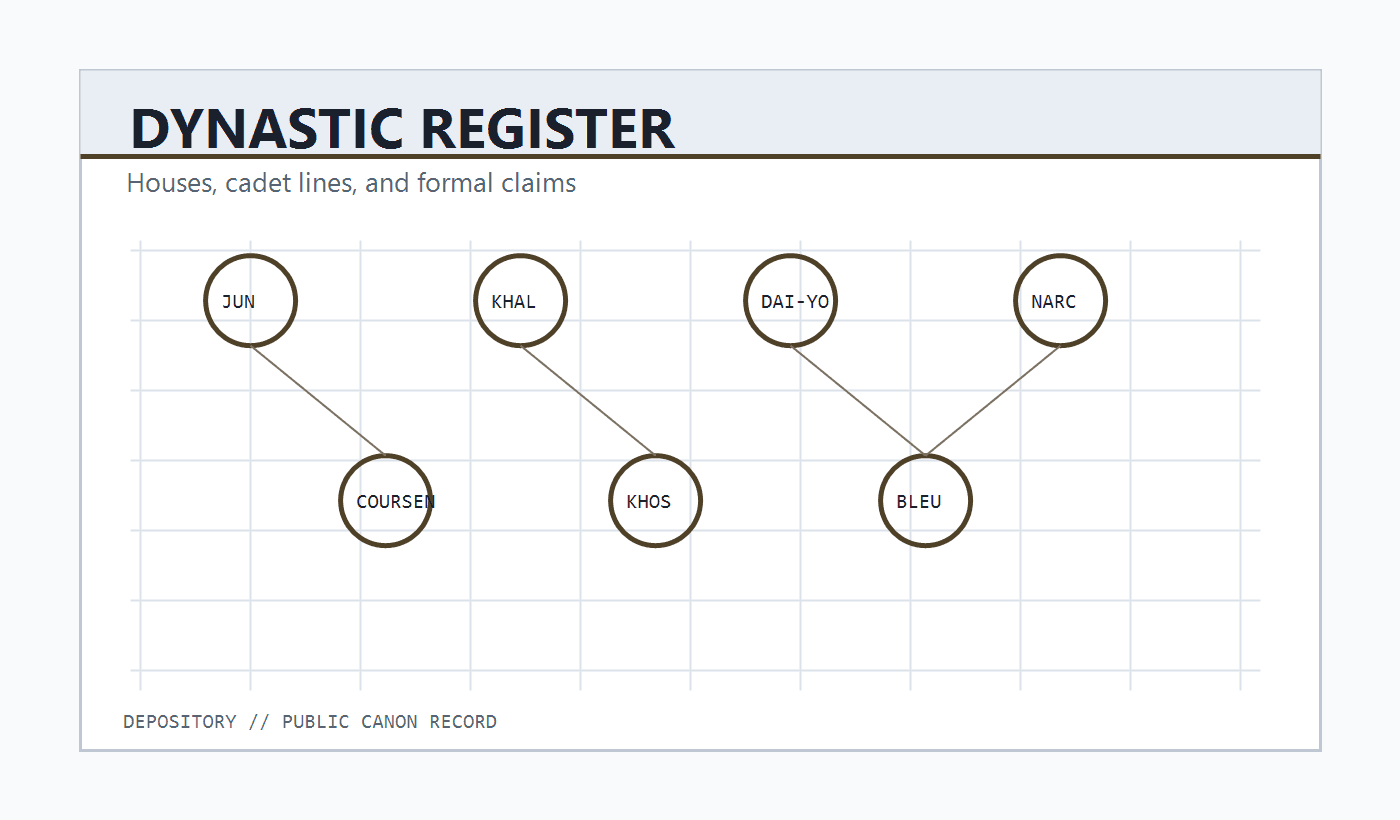
Noble houses, Proto-Ceresian roots, Daiyo restoration, Ran collapse, and Khosagar continental order.
KIC, Nieuwerk, wormhole systems, strategic resources, and interstellar industry after the historical foundation is clear.
The House of Bleuberg was a Frenkian imperial dynasty later tied to Frenemica, Rietan Ceresia, and Ceresian regencies.
The House of Crastin was the prophetic and dynastic foundation behind Astaran-Hanmavian unitarian imperialism.
The House of Daiyo emerged from Dai and Yo consolidation and became the imperial dynasty of restored Hyuna.
The House of Junio-Coursen rules Egden and traces its divine compact to Jun through the Coursen queen's miraculous birth tradition.
The House of Junio-Kahlian is the imperial Ceresian dynasty tracing political rule to Jun and the Kahlian tribal confederacy.
The House of Khosagar-Kahlain is the Ceresian-linked continuation of the Khosagar line after regency, conversion, republicanization, and restoration of ancestral influence.
The House of Narcouster unified Lonardian kingdoms into the Narcouster Empire and later became the figurehead monarchy of Rietan.
The House of Ran was the hereditary sacred ruling house of the Ran apocalyptic empire.
The House of Voyar unified much of Rosoviya through personal unions before being overthrown by Volkygodian socialism.
10 published records
The House of Bleuberg was a Frenkian imperial dynasty later tied to Frenemica, Rietan Ceresia, and Ceresian regencies.
The House of Crastin was the prophetic and dynastic foundation behind Astaran-Hanmavian unitarian imperialism.
The House of Daiyo emerged from Dai and Yo consolidation and became the imperial dynasty of restored Hyuna.
The House of Junio-Coursen rules Egden and traces its divine compact to Jun through the Coursen queen's miraculous birth tradition.
The House of Junio-Kahlian is the imperial Ceresian dynasty tracing political rule to Jun and the Kahlian tribal confederacy.
The House of Khosagar-Kahlain is the Ceresian-linked continuation of the Khosagar line after regency, conversion, republicanization, and restoration of ancestral influence.
The House of Narcouster unified Lonardian kingdoms into the Narcouster Empire and later became the figurehead monarchy of Rietan.
The House of Ran was the hereditary sacred ruling house of the Ran apocalyptic empire.
The House of Terarosa was the ruling house of Teranos, the strongest Ceresian princely duchy before Rietan destruction of the city.
The House of Voyar unified much of Rosoviya through personal unions before being overthrown by Volkygodian socialism.