Start here
Ceresian State System
Junic legitimacy, imperial continuity, Gischenism, public finance, and the archive's central state tradition.
A public, published-only guide to the setting. Use the historical reading paths first; futuristic starworks material sits at the bottom after the political and dynastic foundation.
Curated entry points for the main political, religious, military, dynastic, and technological arcs.
Junic legitimacy, imperial continuity, Gischenism, public finance, and the archive's central state tradition.
The Rietan colonial order, Papersmith organization, the independence war, and the postwar Perlian settlement.
Roscovia, Rietan, Manhisan, Frenemica, the Great War, and the diplomatic order after continental exhaustion.
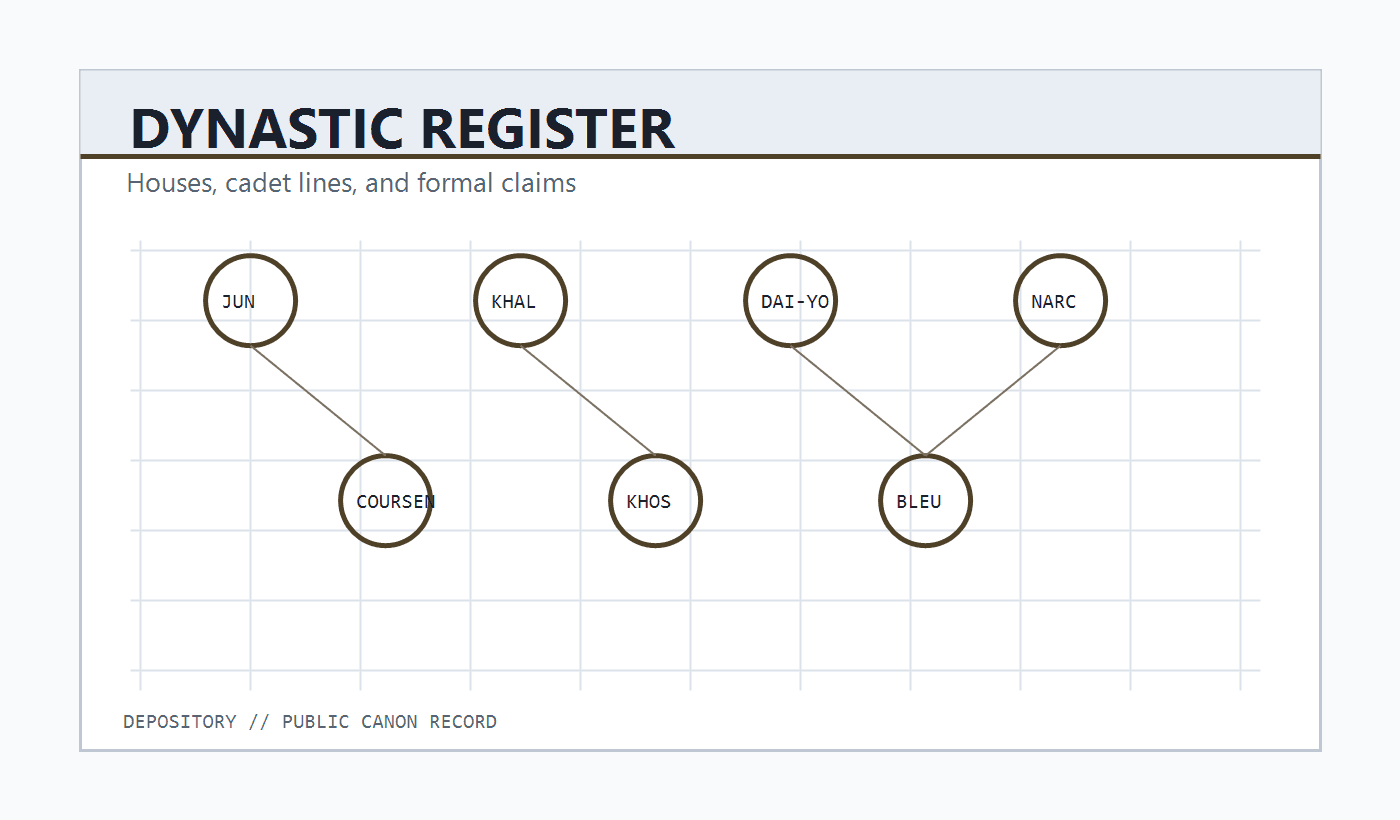
Noble houses, Proto-Ceresian roots, Daiyo restoration, Ran collapse, and Khosagar continental order.
KIC, Nieuwerk, wormhole systems, strategic resources, and interstellar industry after the historical foundation is clear.
Armed conflict that transformed decades of Papersmith asymmetrical warfare into a formal independence movement across the Perlian continent, ending global Rietan military, economic, and naval hegemony.
Colonial victory during Phase I of the Ceresian War of Liberation. Alkali-infused grease weapons burned the Royal Sequoia grounds and terrorized unarmed coalition members.
Civil war that followed the end of the Supreme Admiralty after the Ceresian War of Liberation.
The Kalarian Campaigns were the wars of conquest, regency, and influence fought by Kalarian I and II that transformed Ceresia from city-state into continental superpower.
Colonial victory during Phase I of the Ceresian War of Liberation. A large expeditionary force was annihilated by river gunships and Rietan mortaring.
Colonial victory during Phase I of the Ceresian War of Liberation. Devastating losses forced Hanzo Gische to shift strategy directly.
The Ran-Daiyo conflicts were the succession of rebellions, liberation wars, and exterminatory campaigns through which the Daiyo state replaced Ran authority in Hyuna.
The Rietan Civil War was the post-Great War struggle in which royal forces reconsolidated Rietania after territorial loss, warlord fragmentation, and rebellion.
Colonial victory during Phase I of the Ceresian War of Liberation. Failed after the North Pearl River Campaign prevented reinforcements from arriving.
22 published records
Coalition victory during Phase I of the Ceresian War of Liberation. Divided colonial holdings through control of the Topnah Valley.
Armed conflict that transformed decades of Papersmith asymmetrical warfare into a formal independence movement across the Perlian continent, ending global Rietan military, economic, and naval hegemony.
Colonial victory during Phase I of the Ceresian War of Liberation. Alkali-infused grease weapons burned the Royal Sequoia grounds and terrorized unarmed coalition members.
Civil war that followed the end of the Supreme Admiralty after the Ceresian War of Liberation.
The Inarim Republican Army was a violent third force during the Great War whose crimes led to dissolution and trials under the Treaty of Ceresia.
The Kalarian Campaigns were the wars of conquest, regency, and influence fought by Kalarian I and II that transformed Ceresia from city-state into continental superpower.
Coalition victory during Phase I of the Ceresian War of Liberation. Split the colonial supply network into four separate theaters along the western Ceresian border.
Colonial victory during Phase I of the Ceresian War of Liberation. A large expeditionary force was annihilated by river gunships and Rietan mortaring.
Colonial victory during Phase I of the Ceresian War of Liberation. Devastating losses forced Hanzo Gische to shift strategy directly.
The Ran-Daiyo conflicts were the succession of rebellions, liberation wars, and exterminatory campaigns through which the Daiyo state replaced Ran authority in Hyuna.
The Rietan Civil War was the post-Great War struggle in which royal forces reconsolidated Rietania after territorial loss, warlord fragmentation, and rebellion.
Coalition victory during Phase I of the Ceresian War of Liberation. Captured an important western Ceresian city and strengthened Khosagar tribal courting.
Coalition victory during Phase I of the Ceresian War of Liberation. Ended Rietan rule in easternmost Ceresia while central colonial power remained strong.
Colonial victory during Phase I of the Ceresian War of Liberation. Failed after the North Pearl River Campaign prevented reinforcements from arriving.
Coalition victory during Phase I of the Ceresian War of Liberation. Secured control over an important aquifer tributary of the Pearl Rivers.
Coalition victory during Phase I of the Ceresian War of Liberation. A revenge-motivated interception remembered as a war crime.
Inconclusive during Phase I of the Ceresian War of Liberation. Led to a state of emergency in the old capital of Ceres.
The Great War was a continental Ponitzian conflict between Roscovian-aligned socialist states, the Astaran League, and a neutral but coercive Ceresian League.
Coalition victory during Phase I of the Ceresian War of Liberation. Unified the Tharanim and Ranien mountain corridors under coalition control.
Coalition victory during Phase I of the Ceresian War of Liberation. Established a military corridor through the Topnah Valley and surrounding mountain ranges.
The Treaty of Ceresia was the Ceresian-imposed Great War settlement establishing reparations, referendums, state reorganization, loan relief, and limited Ceresian financial access.
The Volkygodian Wars followed the formation of the Volkygodian Socialist Union and reshaped Rosoviyan politics before the Roscovian Communist Republic.